RVmagnetics
SEO Showcase: When Website Accessibility Determines AI Visibility

Client
RVmagnetics is a technology company developing micro-sensor and magnetic sensor technology solutions. In a specialized B2B sector, ensuring content is accessible, readable, and properly processable for both search engines and AI platforms is vital.
Services
SEO
Client
RVmagnetics
Team
SEO specialist – Jaroslav Uram
AI Visibility Starts with Website Accessibility
When dealing with AI SEO, addressing whether a brand appears in answers from AI platforms like ChatGPT, Gemini, Perplexity, or AI features directly in Google Search is not enough. The first step is verifying whether these systems can access the website’s content in the first place.
If the website restricts their access, returns error codes, hides important content, or renders it in a way that is difficult for automated systems to parse, it risks missing out on being properly processed before content quality even enters the picture.
For RVmagnetics, this is especially critical because it is a specialized B2B website where brand value relies on technical information, product solutions, and trustworthy explanations of niche topics.
How We Expanded Technical SEO for AI
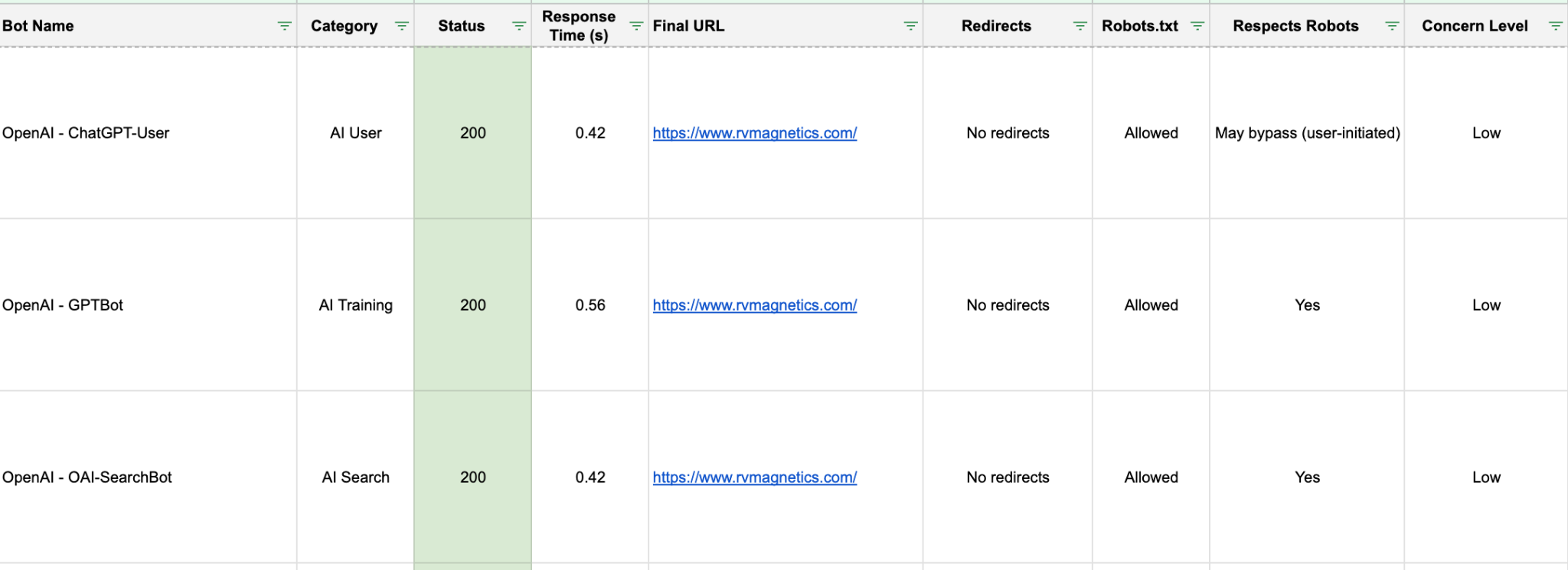
For RVmagnetics, we built upon standard technical SEO practices while incorporating checks specific to AI platforms. We verified how the website responds to bots associated with OpenAI, Gemini, Perplexity, and other AI platforms that crawl websites and utilize their data for response generation.
We primarily checked whether these bots can reach key pages, whether the website avoids misdirecting them, whether content access remains unrestricted, and whether the bots can read core information on the page.
In short, we did not just evaluate whether the website looks correct to a user, but also whether it remains clear to systems operating in the background of AI search.
What AI Technical Readiness Means for SEO
The audit for RVmagnetics showed that the website has a solid foundation for crawling by selected AI bots. Essential pages were accessible, the server returned correct responses, and we identified no major technical blockers hindering content processing across the tested systems.
This serves as a solid baseline, though not the final destination. In ongoing SEO efforts, monitoring technical accessibility continuously makes sense, particularly during site updates, template revisions, new content deployments, or major infrastructure changes. The goal is keeping the website readable not just for users and classic search engines, but also for AI platforms that process content when building answers.
At the same time, this type of audit helps set clear next steps. With a sound technical groundwork in place, SEO efforts can focus more on content quality, topic structure, domain expertise, and brand credibility. Conversely, if access restrictions or readability issues were to emerge, resolving them would take priority before measuring actual visibility within AI responses.